Parliament OKs bill to hike central excise on tobacco, replacing GST cess
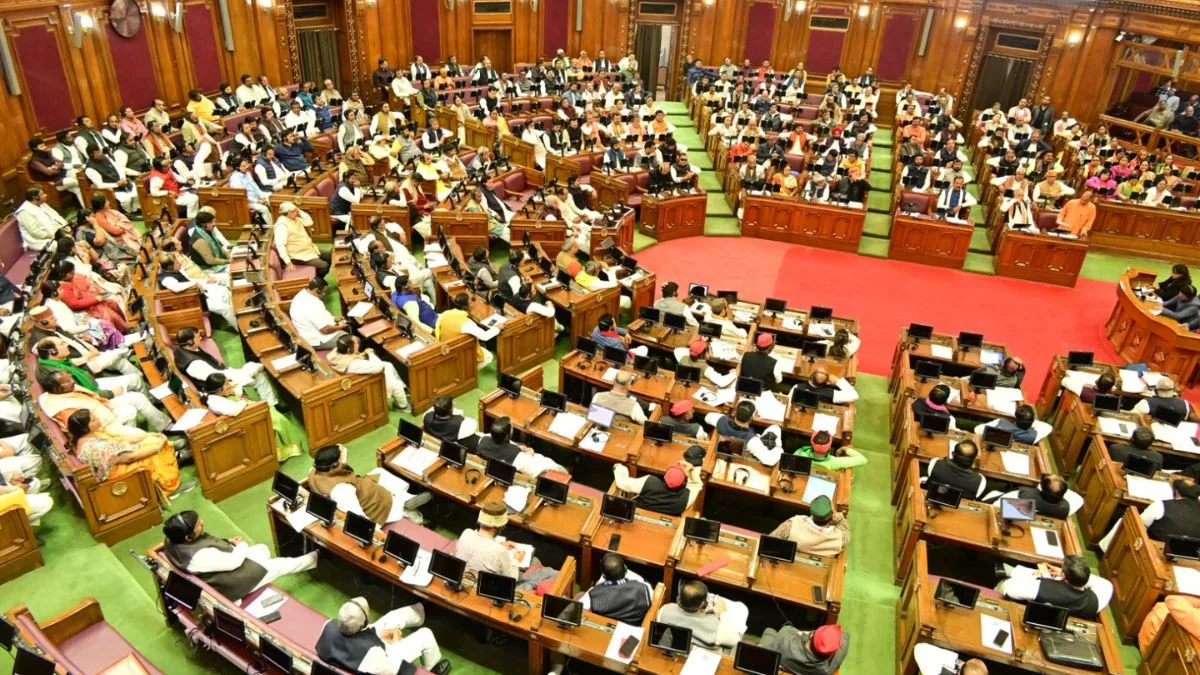
Introduced on December 1, the bill amends the Central Excise Act, 1944.
It also ruled that there is no justification for a composite tax of 5 per cent under Clause 6(b) of Schedule II of the CGST rules.





Representational Image (IANS)
In a landmark ruling which will have far-reaching implications on the country’s eateries and drinking dens, the Authority for Advance Ruling (AAR) – GST of West Bengal has recently ruled that restaurants and bars cannot “put food, drinks and smoking hookahs within the same bracket” even when they are served in the same table in a restaurant or a bar.
It also ruled that there is no justification for a composite tax of 5 per cent under Clause 6(b) of Schedule II of the CGST rules.
Advertisement
Disposing an application seeking advance ruling by a restaurant brand, Pappu Chaiwala, the AAR observed that the phrase “any other article of human consumption” appearing in Clause 6 (b) of Schedule II of CGST cannot include tobacco or non-tobacco hookahs.
“These food and hookah are two taxable supplies,” the AAR observed.
Advertisement
So far, various restaurants operating as Hookah bars predominantly supply hookah services in addition to ancillary food items and are charging GST at the concessional rate of 5 per cent treating the entire activity as a restaurant service.
Refusing to take the argument that Hookahs, both tobacco-based and non-tobacco based, are not provided as an independent service and provided to customers who order food and beverages and therefore form part of the overall hospitality service being imparted in a restaurant environment, the Authority said that “Smoke does not qualify for any form of ‘edible substance’,” and, therefore, tobacco or non-tobacco products in a hookah falls outside Clause 6(b)’s scope.
The AAR ruled that tobacco should be counted as a separate supply altogether and taxed at 18 per cent for (non-tobacco) and 40 per cent for tobacco-based Hookah served at restaurants and bars.
“Across the industry, many restaurants offering hookah have been treating it as a composite restaurant supply and applying the concessional 5 per cent GST rate. The West Bengal AAR ruling fundamentally disrupts that position by holding that hookah is a separate supply of goods, taxable at 18 per cent in case of non-tobacco variants and 40 per cent plus applicable cess in case of tobacco products.
“This creates an immediate classification reset for operators who have built pricing models around the lower rate,” said Manoj Mishra, Partner and Tax Controversy Management Leader, Grant Thornton Bharat.
Mishra said that the exposure could be significant for businesses. “For outlets where hookah sessions are priced between INR 800 and INR 1500 and form a steady revenue stream, the differential tax impact over several years may translate into sizable demands, along with interest and potential penalty.
“Beyond the immediate numbers, the ruling sharpens the interpretation of composite supply under GST and signals a more rigorous approach to bundled offerings. Businesses will need to reassess historical positions, provisioning strategies and contract structures with urgency,” he said.
“The impact will be devastating,” agreed Sudesh Poddar, president of Hotel & Restaurant Association of Eastern India (HRAEI), the regional body affiliated to Federation of Hotel & Restaurant Associations of India (FHRAI), while talking to UNI.
Advertisement